
Part 1
Island and senses
Three holes grown from a heightmap, then the robot's sight and hearing ranges.
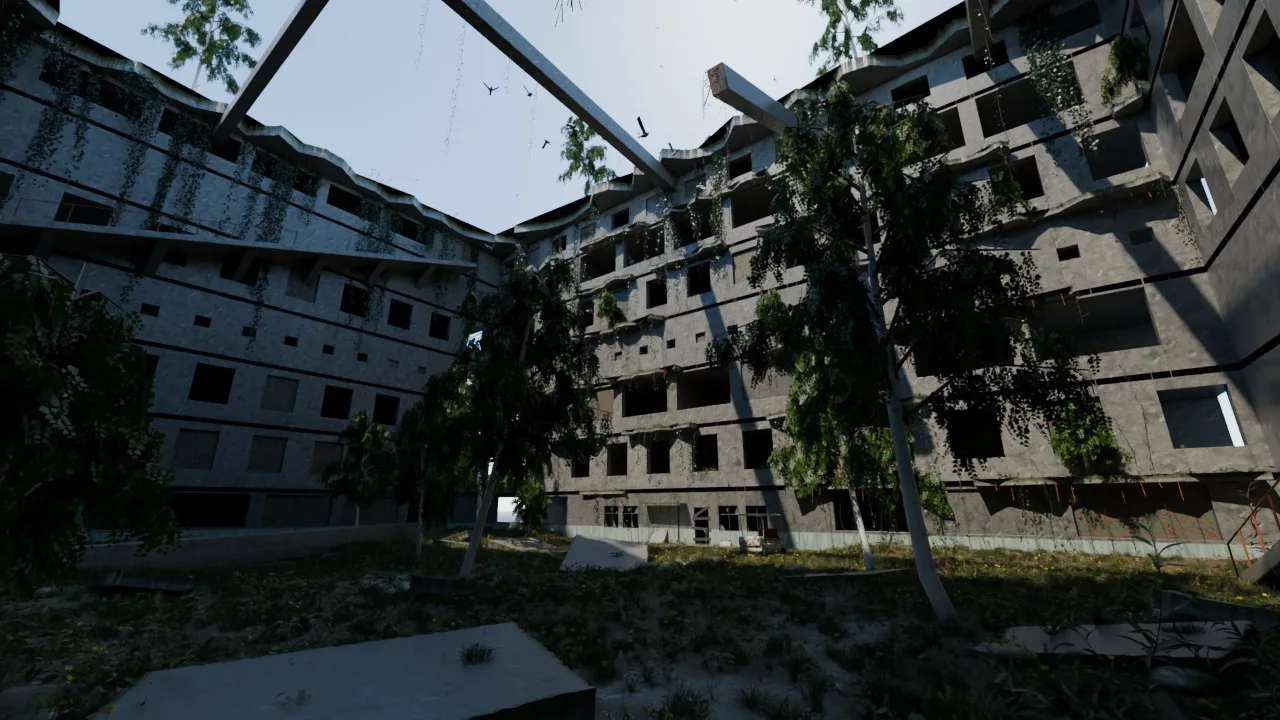
A stealth game on Unreal Engine 5. You are a golf ball, and a robot golfer hunts you across an island course, a flooded underground and a metro.
Someone hits the ball, then comes looking for it. The player rolls, hides in sand and tall grass, and tries to get from one hole to the next without being seen or heard. The robot is the only enemy and the whole game is built around what it can perceive.
The project started on 28 October 2026. The footage folder behind the devlog videos holds about 1,100 captured screenshots from the first ten days, and the development log below follows those parts in order.
It is built on Unreal Engine 5 with Nanite and Lumen, Blueprints and C++. Every mesh is modelled in Blender, and Python scripts handle placement and checks. The target is PC, and the build is meant for Steam: no paths are tied to the development machine, and DLSS, FSR and TSR upscaling keep laptops and the Steam Deck playable. The game has three levels, an underground section, a bar and an opening cutscene.
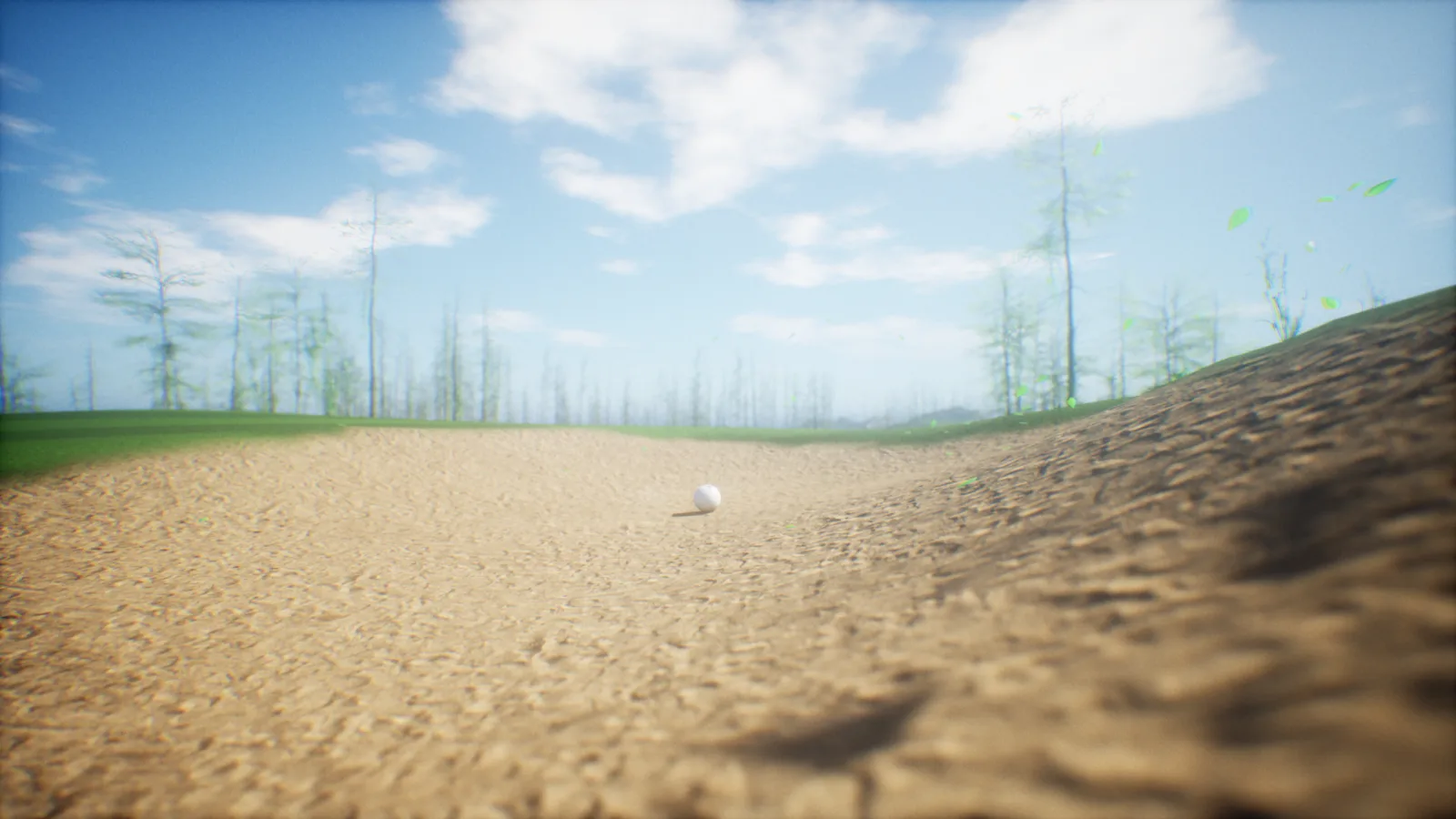
Perception is the core system, so it was written first. The robot sees and hears with fixed ranges, and the player can change them by moving differently or by choosing where to be.
In tall rough the robot sees about half the open distance. These are tuning values from the first devlog part and they still change as levels are built.
The twelve devlog parts, in the order they were recorded. Part 12 was recorded on day ten, around 6 November.
Three holes grown from a heightmap, then the robot's sight and hearing ranges.
Grass in seven layers over 20 m cells, nearest cells built first. Vines from code, 110 falling leaves, one to three gulls at a time.
Water redone from a flat shader into a transparent surface with depth, waves and a real underwater view. Eye adaptation and light through leaves.
Wind, gulls, surf and gunshots synthesised and redone until they stopped sounding fake. Low piano music, chromatic aberration and film grain.
Logo and intro video, a menu on a curved band, fullscreen handling, and nothing hardcoded to the development machine.
Graphics, controls and gameplay settings that all do something. Motion blur everywhere except the ball, quality presets, difficulty that changes the robot.
An empty pool with steam and fog, a vanish key, bullet holes, the ball bursting when hit, sparks from neon, and a photo mode focused on the ball.
An invented robot language: binary spoken in two frequencies, bits mapped to letters. The ball is named Bob.
An alley built for atmosphere rather than detail: neon, wet ground, signs of someone living there. The setting for the final conversation.
A dark metro line with a yellow zone deep inside and darkness at the exit. Music from old PC beeps, picked from about sixty candidates.
An air vehicle modelled in Blender with turbines, scratches and searchlights. Bullets break walls instead of layers.
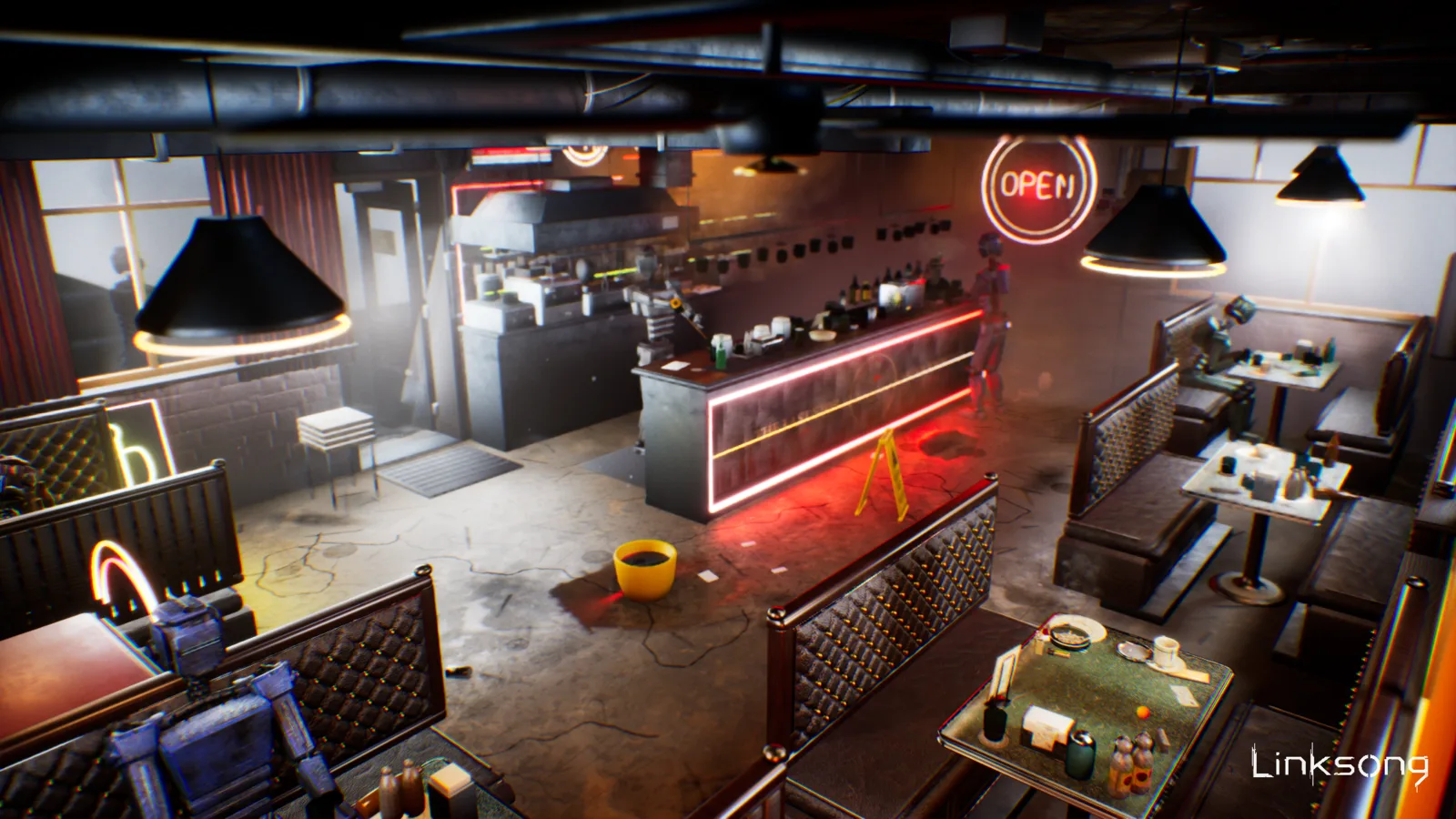
A bar scene with every asset built by hand, and an automated loop that checks each shot for broken geometry. Robots with personalities.
Frames from the running game and the cutscene scenes, mostly captured on 14 November.
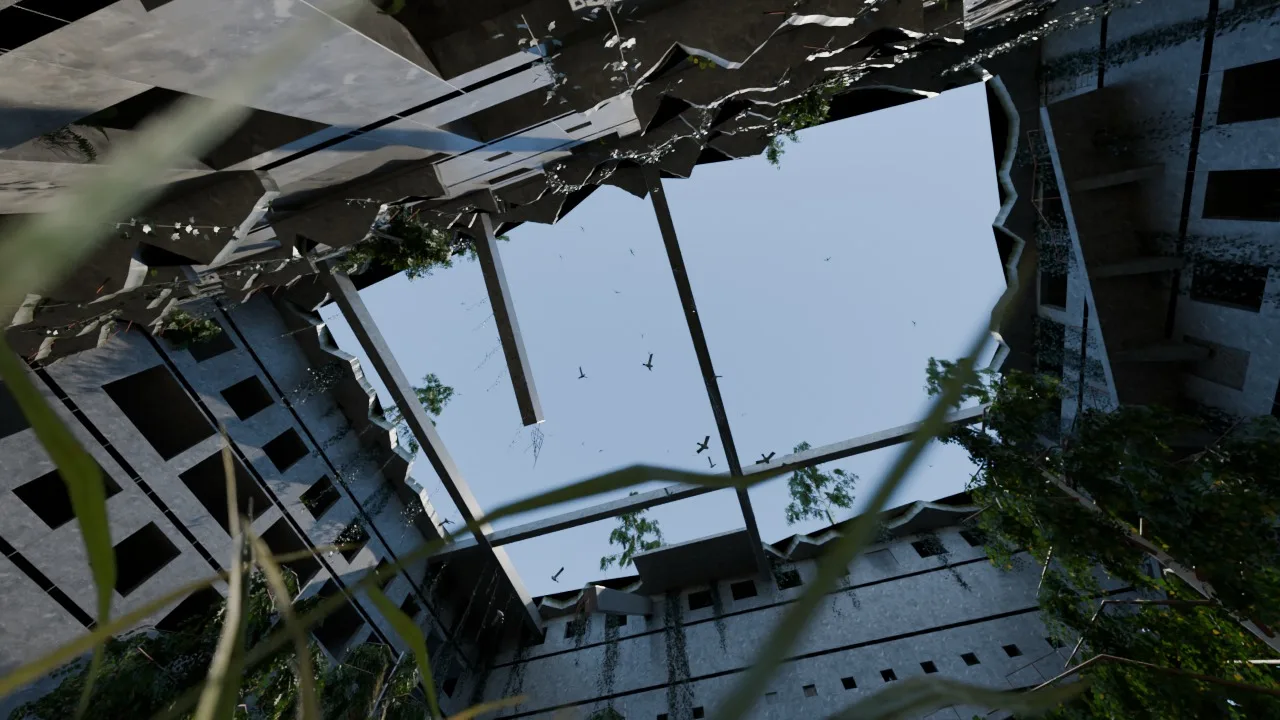
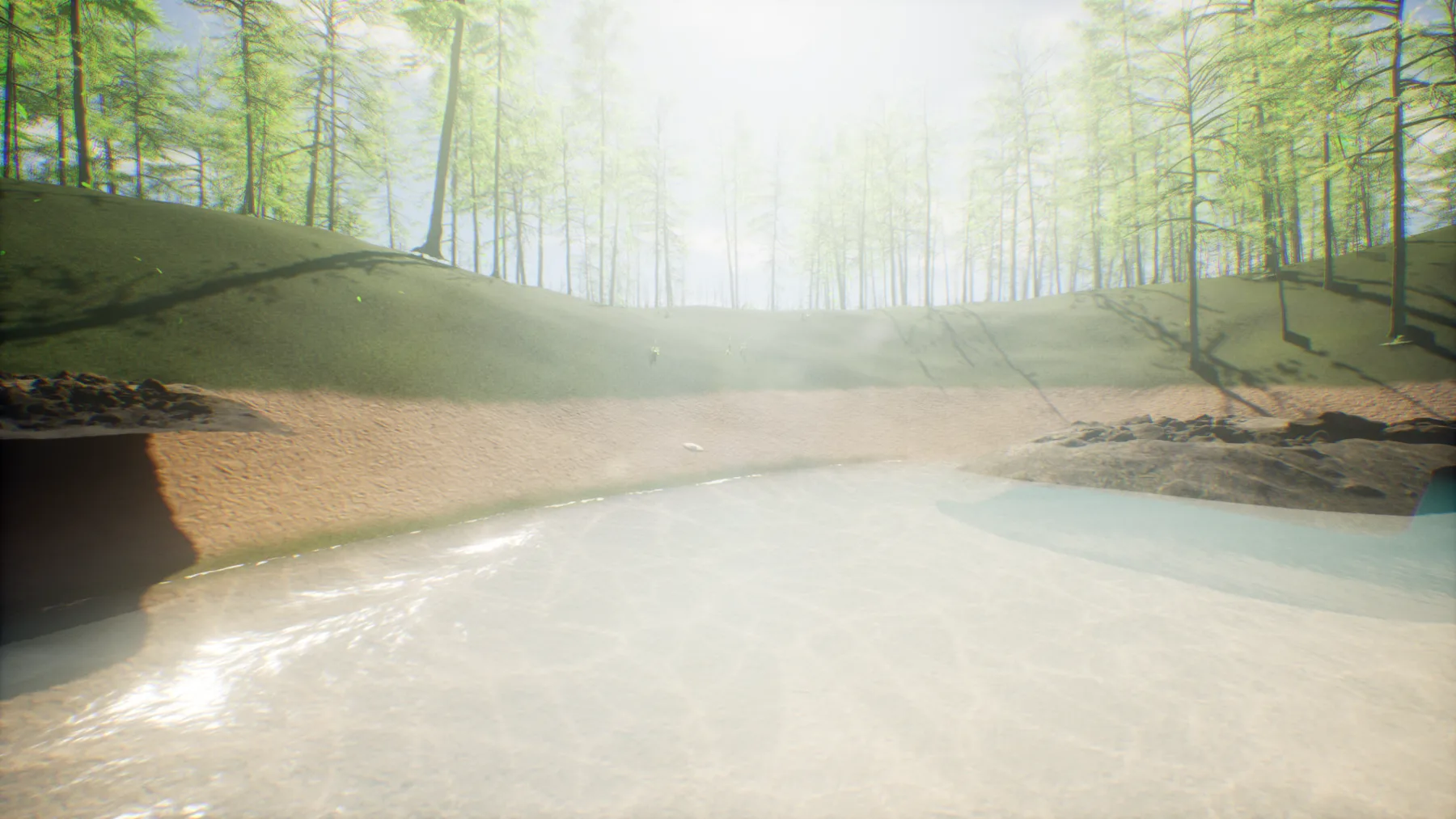
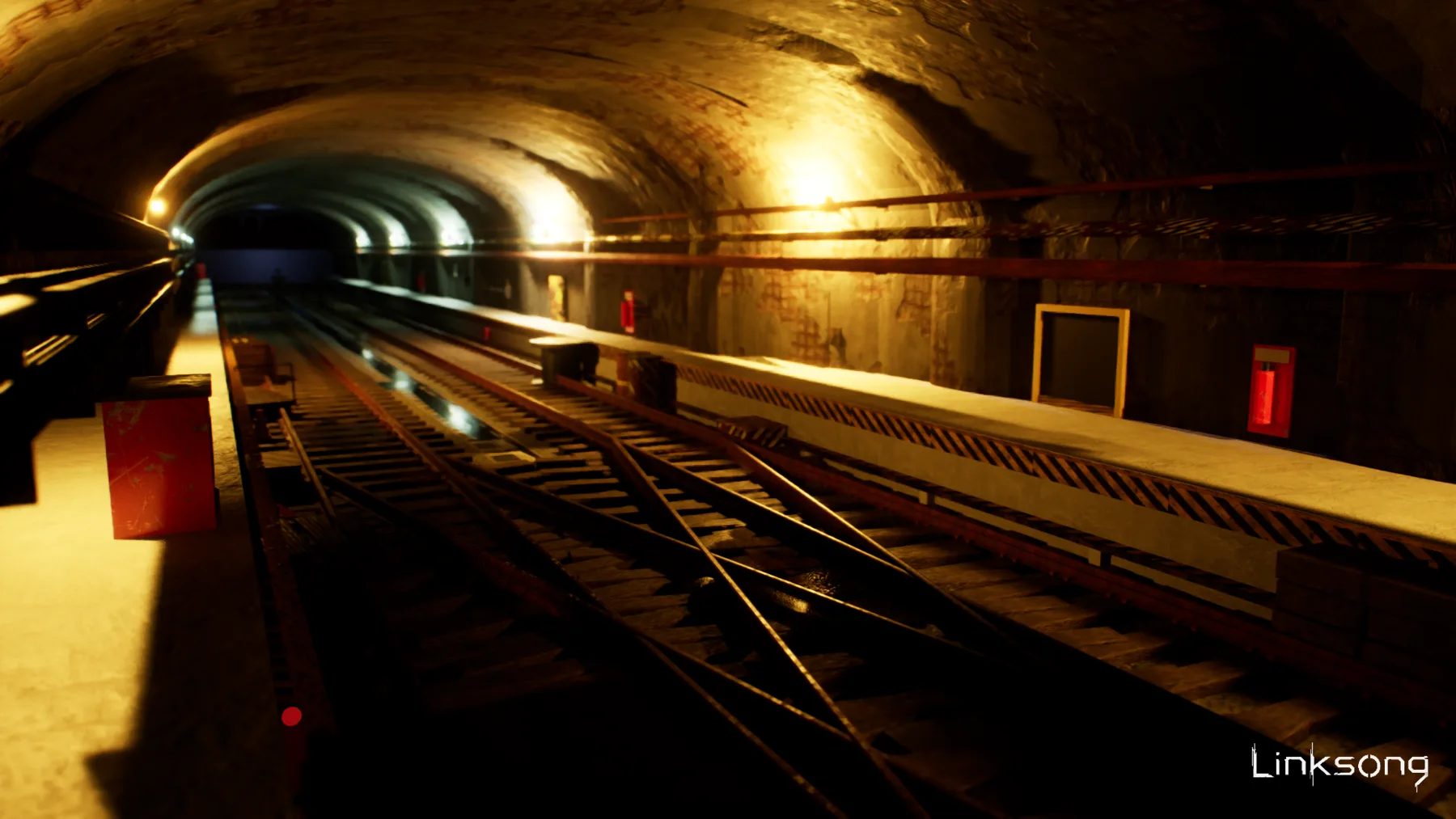
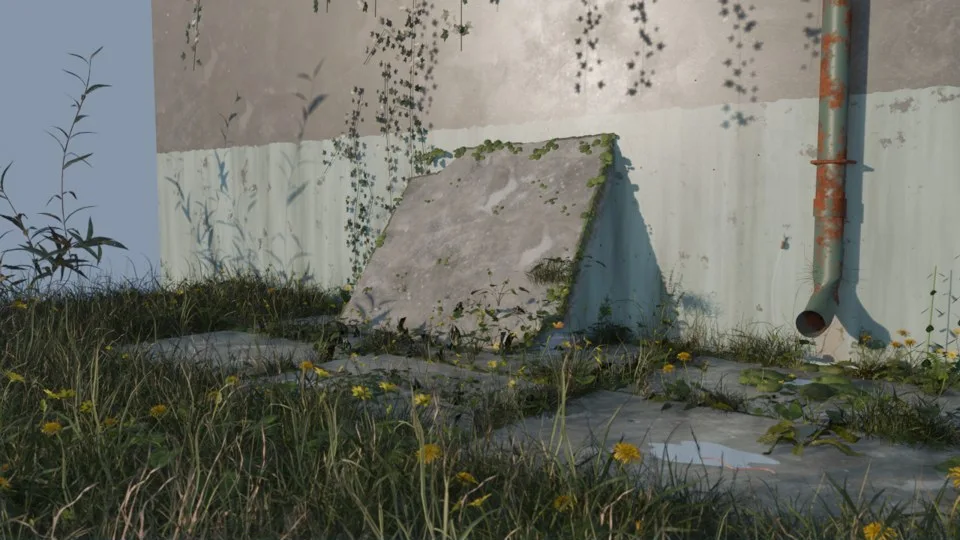
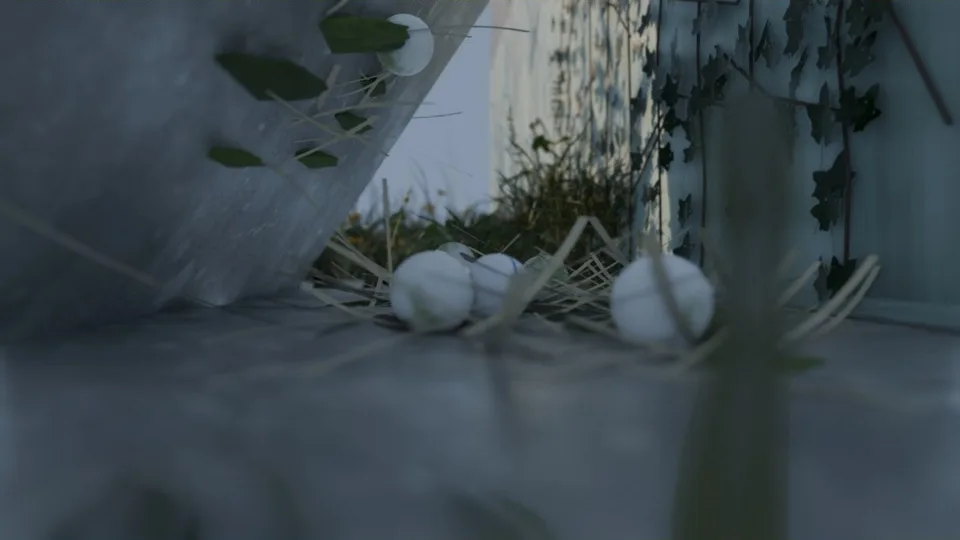
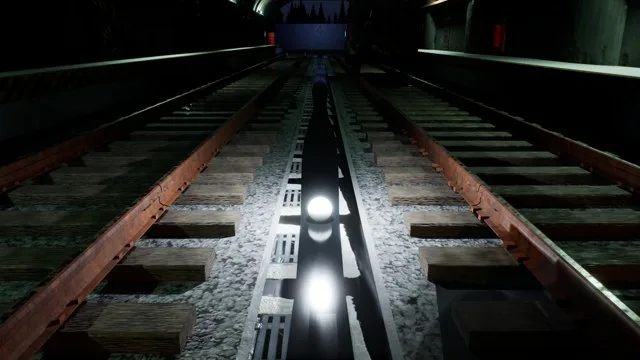
A nest on a concrete terrace in summer, with a birch branch, leaves, eggs and a spider web. The nest is built and is being checked in frames.
Fairway, sand, water, a catapult and a boat as the ending. Playable. Saves and checkpoints, the buried-ball task and the ending area are being fixed.
Storage hall, steam room, cistern, eight controllable cameras leading to a pump room, and 46 lamps with housings. Built. Lighting and the section after the pool are being reworked.
1,908 detailed props in the corridors, 218 ceiling drip points, wet floor decals and direction arrows painted on the floor. Props and sound are done, frames are pending.
The interior scene with robots and hand-built assets. Built.
Since part 12 an automated loop renders frames from fixed viewpoints and flags broken geometry, floating props and blown exposure before they reach a build. The same checks found underground lamps hanging in the air, caused by a wall test that started inside a collision volume.
The underground levels were exposed at +4.5 EV while the checks ran at +1, so the same room looked correct in tests and burnt white in the game. Exposure is now set to 1.5 and the checks use the same value.
Fog in the cistern showed square cells, so fog resolution is now a setting.
The presets are Low, Medium, High and Ultra, with cell sizes of 16, 10, 6 and 4 pixels. The previous fixed values were 24, 16 and 14.
Patchy fog in the storage hall turned out to be lens flares: a row of tubes under the ceiling was reflecting through the centre of the frame as a green and white beam. Flares are off underground.